The National Curriculum for Key Stage 3 is a publicly available government document. But it is written in statutory language for teachers, school inspectors, and policy professionals, not in the practical, applied terms parents need to understand whether their child is genuinely on track for strong GCSE performance. This guide translates it into plain English across Maths, English, and Science.

1. The Curriculum Parents Do Not Get Explained

Most parents encounter the KS3 curriculum only through school reports, which use internal phrasing that cannot be compared across schools or calibrated against a national standard. This creates a blind spot: a child can appear to be progressing well according to their school's internal system while carrying gaps that will matter significantly once GCSE content begins, typically at the end of Year 9 or the start of Year 10.

💡 How to use this guide

The benchmarks below describe what a child should be able to do confidently by the end of Year 9. They are not aspirational targets. They are the foundations the GCSE syllabus assumes are in place when teaching begins. If your Year 9 child cannot do something listed here, that is a gap to address now, not in Year 10 when GCSE content is running simultaneously.

2. By End of Year 9: Maths Benchmarks

Year 9 Maths benchmarks span four core areas. The content below represents the minimum a student targeting Grade 5 or above at GCSE should have secured before Year 10 begins.

📐 Year 9 Maths: What your child should be able to do
ALGEBRA
Solve quadratic equations by factorising (e.g. x² + 5x + 6 = 0)
Form and solve simultaneous linear equations in two unknowns
Generate the nth term of arithmetic, geometric, and simple quadratic sequences
Plot and interpret quadratic and other non-linear graphs with confidence
NUMBER
Apply standard form confidently, including in scientific contexts
Work fluently with fractional and negative indices
Handle percentage problems including reverse percentage calculations
GEOMETRY
Apply Pythagoras' theorem and SOHCAHTOA trigonometry to right-angled triangle problems
Calculate volumes and surface areas of composite 3D shapes
Beginning to encounter circle theorems and properties
STATISTICS AND PROBABILITY
Interpret cumulative frequency graphs and box plots to compare distributions
Calculate the probability of combined events using Venn diagrams and tree diagrams
⛔ The two critical gap indicators for Maths

A student who arrives in Year 10 unable to factorise simple quadratics or apply trigonometry to a right-angled triangle has significant KS3 gaps that will affect GCSE teaching from the first week. Both skills appear in the earliest weeks of GCSE content. Both are fixable in Year 9 with targeted work. Neither is fixable in Year 10 without stealing time from new GCSE material being taught simultaneously.

3. By End of Year 9: English Benchmarks

English benchmarks at Year 9 level are about depth and analytical sophistication, not just task completion. The table below sets out what a student should be doing confidently, not just occasionally, by the end of Year 9.

SkillYear 9 benchmark
Analytical writingExtended analytical essays with a clear argument, integrated evidence, consideration of authorial intent, and some contextual awareness, approaching GCSE style throughout.
Unseen text analysisInferred meaning and language analysis: not just surface retrieval, but genuine engagement with how language creates meaning and effect.
Non-fiction writingPersuasive and informative writing for a specific audience with accurate, varied, and deliberately chosen language throughout.
LiteratureHas encountered Shakespeare and at least one 19th-century text. Beginning GCSE-style analytical engagement with language, character, and theme.
Grammar accuracyAccurate and varied in their own writing. Can identify and explain grammatical features including in other writers' texts.
Analytical writing
Year 9 benchmark
Extended analytical essays with clear argument, integrated evidence, authorial intent, and contextual awareness approaching GCSE style.
Unseen text analysis
Year 9 benchmark
Inferred meaning and language analysis. Not surface retrieval, but genuine engagement with how language creates meaning.
Non-fiction writing
Year 9 benchmark
Persuasive and informative writing for a specific audience with accurate, varied, deliberately chosen language.
Literature
Year 9 benchmark
Has encountered Shakespeare and a 19th-century text. Beginning GCSE-style analysis of language, character, and theme.
Grammar accuracy
Year 9 benchmark
Accurate and varied in writing. Can identify and explain grammatical features in other writers' texts.

"A student who cannot write a properly structured analytical paragraph by the end of Year 9 will spend the first term of Year 10 learning this skill at the same time as GCSE content is being taught. That is a significant and avoidable disadvantage."

4. By End of Year 9: Science Benchmarks

Science benchmarks at Year 9 span Biology, Chemistry, and Physics, as well as the practical skills component that carries significant marks in both Combined and Triple Science GCSEs. The table below covers what a student should have encountered and understood by the end of Year 9.

ScienceYear 9 benchmark topics
BiologyCell structure and function, genetics and heredity basics, photosynthesis and respiration, natural selection and evolution, ecosystems and interdependence.
ChemistryThe periodic table and atomic structure, chemical reactions (acids/bases, combustion, displacement), separation techniques, introduction to rates of reaction.
PhysicsForces and Newton's laws, properties and behaviour of waves, electricity and circuits, magnetism, space physics and the solar system.
Practical skillsDescribe experimental method for a given investigation. Identify and explain the independent, dependent, and controlled variables. Evaluate data from a simple experimental scenario.
Biology
Year 9 topics
Cell structure, genetics basics, photosynthesis and respiration, natural selection, ecosystems.
Chemistry
Year 9 topics
Periodic table, atomic structure, chemical reactions (acids/bases, combustion, displacement), separation techniques.
Physics
Year 9 topics
Forces and Newton's laws, waves, electricity and circuits, magnetism, space physics.
Practical skills
Year 9 benchmark
Describe experimental method. Identify independent, dependent, and controlled variables. Evaluate data.
⚠️ Maths gaps and Science GCSE

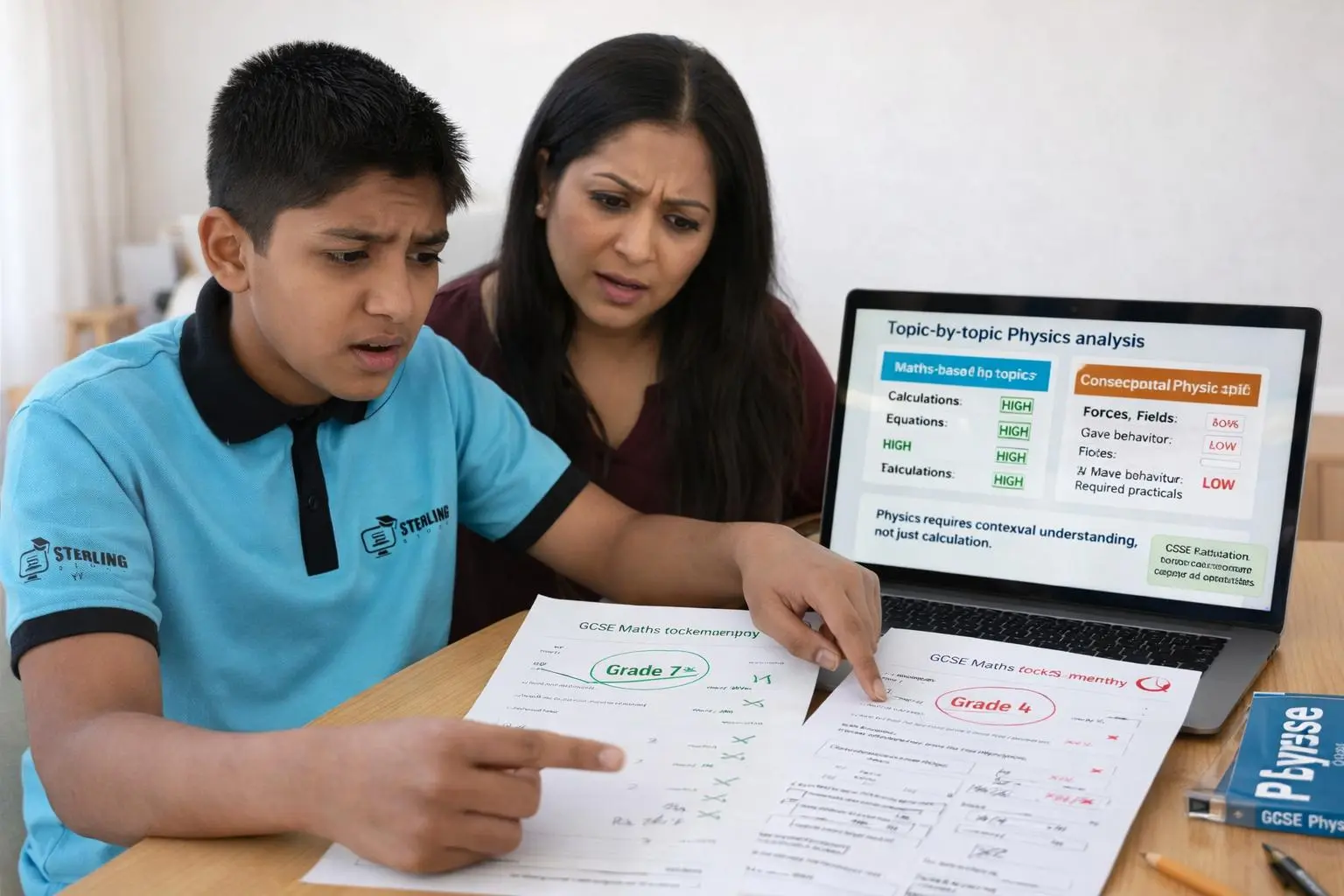
Students who are strong in Science but weak in Maths face a specific problem at GCSE: Physics and Chemistry both have significant mathematical components. Students in this position benefit from simultaneous KS3 Maths and Science support rather than treating them as entirely separate problems, because the subjects are genuinely interdependent at GCSE level.

5. Frequently Asked Questions

Is the KS3 curriculum the same at all schools?

The National Curriculum sets minimum expectations for all maintained schools, but schools have significant flexibility in delivery, pacing, and depth. Some schools begin formal GCSE content in Year 9; others extend KS3 through to the end of Year 9. This means KS3 experience varies meaningfully between schools and cannot be assumed to be equivalent. The benchmarks in this guide reflect what any student needs to have secured before GCSE content begins, regardless of school.

How do I know if my Year 9 child has gaps before GCSE content begins?

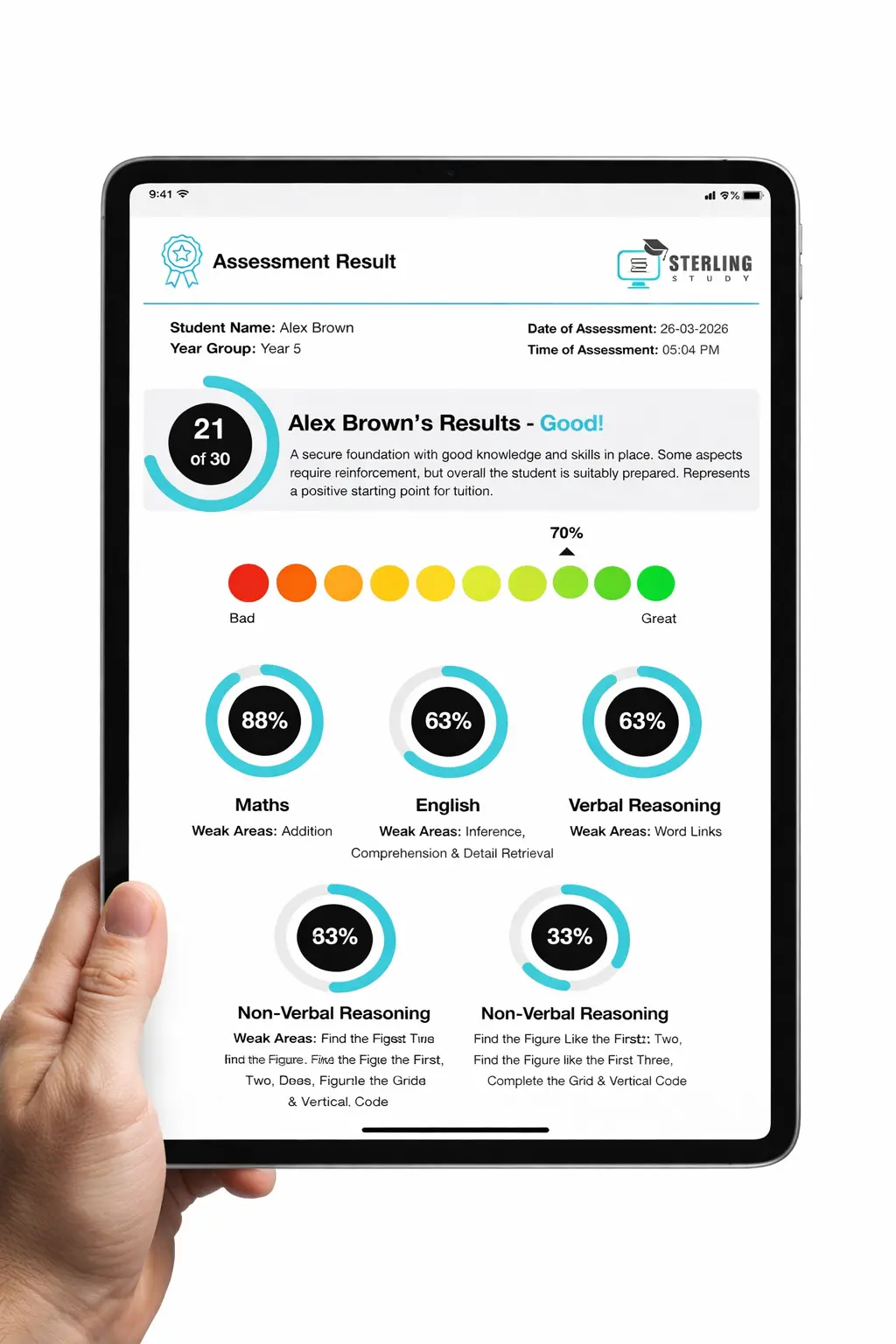
A diagnostic assessment before September of Year 10 is the most valuable thing you can arrange. It tells you exactly which gaps exist, how significant they are, and how much time is available to address them before those topics appear in GCSE papers and teaching. Contact us to arrange one.

My child's school says they are "ready for GCSE." What does that actually mean?

It typically means the school believes your child has met the internal KS3 threshold for beginning GCSE content. It does not necessarily mean they have no gaps, or that their foundation is strong enough for the specific grade they are targeting. An independent assessment gives you the detailed picture that a general school assessment cannot provide.

Year 9 red flags

Cannot factorise a simple quadratic equation
Struggles to apply SOHCAHTOA to a right-angled triangle
Writing does not yet include evidence, explanation, and authorial intent
Cannot describe experimental method or identify variables reliably

What to do before Year 10

Book a pre-GCSE diagnostic assessment in Year 9
Target the specific gaps identified before September
Secure all Year 9 benchmarks before GCSE content begins
Contact us to arrange a targeted Year 9 support plan

Find Out If Your Year 9 Child Is Truly GCSE-Ready

Our pre-GCSE diagnostic assessment covers Maths, English, and Science at Year 9 level and gives you a detailed written report including:

  • Your child's actual working level in each subject compared to Year 9 benchmarks
  • The specific gaps that need closing before GCSE content begins
  • A prioritised action plan for the summer before Year 10
  • An invitation to a free trial class, no obligation

90% of our students achieve Grade 6 or higher at GCSE. Led by PhD scientists from Imperial College and UCL. No contracts.