Why Year 7 Is the Most Critical Term of Secondary School (2026 Parent Guide)
Most parents relax after SATs. The families whose children thrive at GCSE don't. Here's what the research says about the September–December Year 7 window — and what to do about it.
Worried about your child's Year 7 transition? Book a free diagnostic — our team will find exactly where the gaps are before they compound →
Strong Year 6 student. Good SATs. Lovely summer. Starts secondary school. December report arrives. Parents are shocked. This trajectory is common enough that it has a name in education circles: the Year 7 dip. What causes it — and what prevents it — is what this guide is about.
Fix them.
For free.
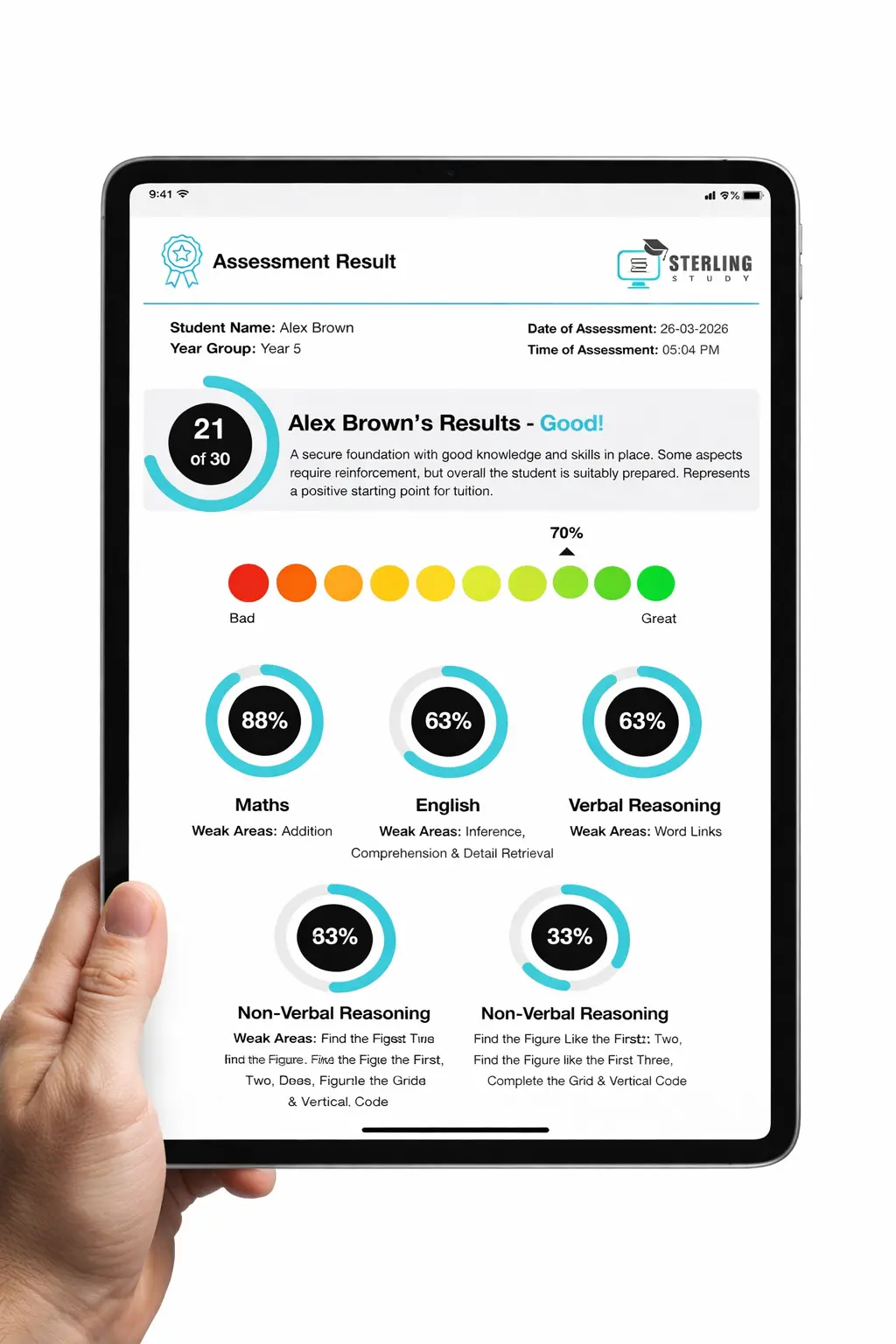
- ✓ Subject-by-subject breakdown across all Science topics
- ✓ Time-per-question analysis
- ✓ Where you stand vs grade boundaries
- ✓ Detailed PDF results sent immediately
- ✓ No strings attached
1. The Pattern That Plays Out Too Often
The Year 7 dip is not a myth. It is a well-documented phenomenon, and it does not just affect weaker students. Children who excelled at primary school — who were confident, curious and well-regarded by their teachers — arrive in secondary school and discover that everything they relied on has changed at once.
The pace is faster. The subjects are more abstract. The teachers do not know them yet. The homework requires genuine self-direction rather than prompted reminders. And crucially, asking for help now requires initiative rather than proximity.
Students who fall behind in the first year of secondary school are significantly less likely to recover to expected progress by Year 11 than students who experience the same starting point but receive early support. The transition window is critical.
The good news: this dip is entirely preventable. But it requires action in the window — not after the December report has already confirmed that something has gone wrong.
2. What Changes in September
The shift from primary to secondary school is not just logistical — it is a fundamental change in how learning is structured and who is responsible for it. The table below captures the expectations that catch most Year 7 students off guard.
| Primary School Expectation | Secondary School Expectation |
|---|---|
| Teacher manages your learning pace | You manage your own pace across 6–7 subjects |
| One teacher knows you as a whole person | Multiple teachers — you're a name on a register at first |
| Homework is manageable and supervised | Homework requires genuine self-direction |
| Support is visible and immediate | Asking for help requires initiative |
| Curriculum at familiar pace | New content, faster pace, more abstract thinking required |
Children who arrive in Year 7 without the habits and foundations for independent learning find the first term genuinely overwhelming. The subject knowledge gaps from KS2 — which may have been invisible in primary school — compound immediately when new content builds on top of shaky foundations.
Bright students are often the hardest hit. They have coasted through primary school on natural ability without needing strong study habits. In Year 7, natural ability is no longer enough on its own — and they have never had to develop the habits that would support them.
3. What Determines Year 7 Success
Across thousands of students, the difference between those who thrive and those who struggle in Year 7 comes down to three things. Not raw intelligence. Not how good their primary school was. These three determinants, consistently.
The third point is often the most overlooked. School reports are infrequent and deliberately measured in their language. Parents' evenings are short and rarely alarming. By the time a formal signal arrives that something is wrong, weeks or months of ground have already been lost.